
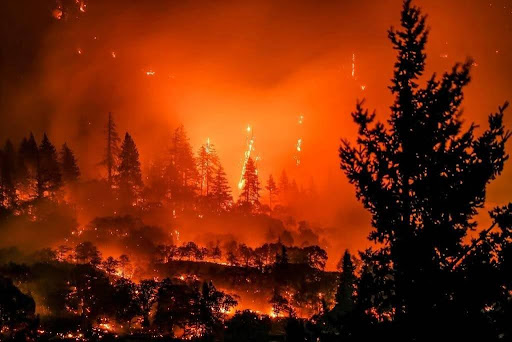
Wildfires are a natural but increasingly dangerous phenomenon, shaped by both ecological processes and human activity. They occur when uncontrolled fires ignite in wildland areas such as forests, grasslands, and shrublands, often due to lightning strikes, human activity, or accidental causes. In recent decades, climate change has amplified wildfire risks, making them more frequent, intense, and prolonged. NASA data shows that extreme wildfire activity has more than doubled worldwide over the past 21 years, with the largest increases in temperature to the Western U.S. and boreal forests of northern North America and Russia. Warmer temperatures, especially at night, allow fires to burn longer, while drier conditions extend fire seasons. These changes also increase carbon emissions, with boreal forest fires nearly tripling in emissions between 2001 and 2023. Wildfires have both beneficial and harmful effects on landscapes. On the positive side, they can clear dead vegetation, recycle nutrients, and promote diverse plant and animal habitats. However, they also cause soil hydrophobicity, increasing flood risk, pollute waterways with ash and heavy metals, and destabilize slopes. Smoke from wildfires can travel hundreds or thousands of miles, affecting air quality and public health. Wildfire smoke contains fine particulate matter (PM2.5) and other pollutants that can penetrate deep into the lungs, weakening the immune system defenses and altering gene expression. In Northern California, wildfire smoke now accounts for up to half of annual particulate exposure, posing risks to children, the elderly, and pregnant women. Chronic exposure may reduce longevity and increase health risks. Experts emphasize reducing risk at the source through prescribed burns to remove flammable fuels. Community engagement is also a good strategy on educating people on fire safety. You can also do infrastructure improvements such as upgrading power lines to reduce spark risks. Combining climate adaptation, land management, and community preparedness is essential. Research is ongoing into predictive fire modeling, air quality monitoring, and long-term health impacts. As wildfire seasons lengthen and intensify, proactive measures and coordinated responses will be critical to protecting ecosystems, infrastructure, and public health. In short, wildfires are a growing challenge tied to climate change, but with science-based strategies, we can reduce their impact and build resilience for the future.
Conservation Corner is a weekly article produced by the Forest County Land Conservation and Land Information Department. For more information contact Lucas O’Brien, Forest County Land Conservation Technician at 715-478-1387 or by e-mail at