
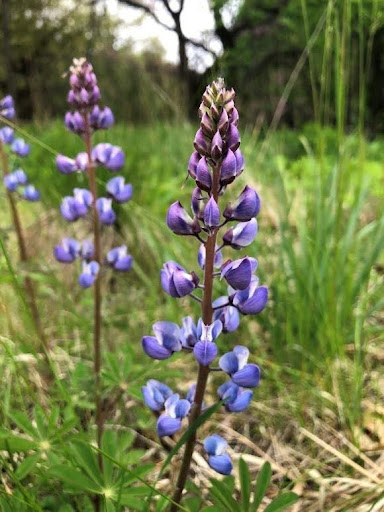
Long before roads and farms reshaped northern Wisconsin, wild lupine was spread vastly around the county in shades of blue and purple. Today, conservationists see it as a symbol of the region’s natural heritage, and a plant worth protecting. Wild lupine is a perennial plant in the pea family (Fabaceae). It typically grows 1-2 feet tall, with palmately divided leaves, each leaf composed of 7-11 narrow leaflets radiating from a central point. In late spring to early summer, it produces tall spikes of pea like flowers, most of them bluish-purple, though white and pink forms occur. The blooms are lightly fragrant and attract a variety of bees, butterflies, and other pollinators. In northern Wisconsin, wild lupine thrives in sandy soils along pine barrens, oak savannas, and dry prairies. Open woodlands are ideal for this plant where sunlight reaches the forest floor. The most common spots you will notice these plants is along roadsides and restored prairie plantings where competition from aggressive grasses is managed. It prefers dry to moderately moist conditions and does not tolerate heavy shade or waterlogged soils. This plant is the only larval host plant for the endangered Karner blue butterfly. Without lupine leaves, Karner blue caterpillars cannot survive. The plant also supports bumblebees and solitary bees, other butterfly species such as swallowtails, and they also put more nitrogen into the soil through its root nodules which benefit surrounding plants. Populations of wild lupine have declined due to a few reasons. The main reason is due to habitat loss from agriculture and development. The other reason is due to competition from shrubs and trees to shade out lupine as well as invasive species competition. Conservation efforts in northern Wisconsin include prescribed burns to maintain open habitat, seed collection and replanting in restoration projects, and Karner blue butterfly recovery programs that protect and expand lupine populations. For gardeners and landowners trying to grow wild lupine, keep these few tips in mind. Choose a sunny location with sandy or well drained soil. Avoid adding fertilizer, lupine thrives in nutrient poor conditions. Sow seeds in fall or early spring, scratching the seed coat can improve germination. Avoid overwatering and heavy mulching. All in all, wild lupine is more than a seasonal splash of color, it is a cornerstone of northern Wisconsin’s natural ecosystems. Protecting and restoring its habitat ensures that the Karner blue butterfly and countless other species will continue to thrive. Whether spotted along a roadside or in a restored prairie, the sight of wild lupine in bloom is a reminder of the resilience and beauty of native landscapes.
Conservation Corner is a weekly article produced by the Forest County Land Conservation and Land Information Department. For more information contact Lucas O’Brien, Forest County Land Conservation Technician at 715-478-1387 or by e-mail at