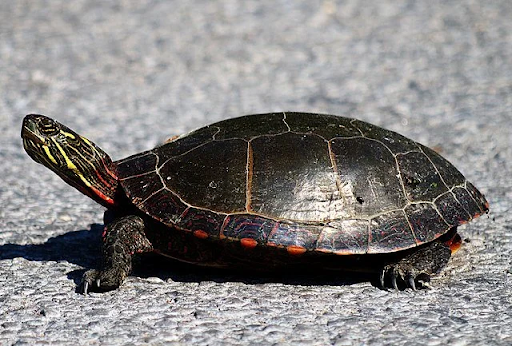
Wisconsin’s lakes, rivers, and wetlands are home to a surprising diversity of turtles. From the common painted turtle basking on a log to the elusive, state endangered ornate box turtle, these reptiles play an important role in the state’s ecosystems. Understanding their habitats, behaviors, and conservation challenges is key to ensuring their survival. According to the Wisconsin Department of Natural Resources, there are 11 native turtle species in the state. These turtles inhibit a range of environments, from shallow ponds and marshes to fast flowing rivers and sandy uplands. Most species are semi-aquatic, spending time both in water and on land. One common behavior turtles exhibit is called basking, this is how turtles regulate their body temperature. Diets for turtles varies by species, ranging from aquatic plants and algae to insects, fish, and carrion. Between the months of May and June, you may spot more turtles and this is due to it being nesting season. Female turtles will travel on land to find a suitable place to nest. These nesting sites are often located along roadways, residential yards, and open upland areas. Typically, good nesting sites for turtles are sandy areas that are exposed to sunlight. Many of these nesting sites are separated from waterbodies by roads, which causes a higher risk to turtle populations. Turtles also have increased levels of predation by raccoons, skunks and coyotes. They also face habitat loss due to wetland drainage, urban development, and agriculture. The Wisconsin DNR has a few different ways we can help turtles from now through July. One step is just slowing down while driving, be alert and reduce distractions, especially on roads near wet areas, lakes and rivers. Another way we can protect turtles is by protecting nests. If you happen to find a nest, be sure that you don’t disturb the nest and allow the hatchlings to come out on their own. The last thing we can do is just protecting wetlands and shoreline vegetation. Turtles are more than just a familiar sight along Wisconsin’s waterways, they are vital indicators of ecosystem health. By learning about the species that share our state and taking steps to protect them, we can ensure that these ancient reptiles continue to thrive in Wisconsin’s landscapes.
Conservation Corner is a weekly article produced by the Forest County Land Conservation and Land Information Department. For more information contact Lucas O’Brien, Forest County Land Conservation Technician at 715-478-1387 or by e-mail at