
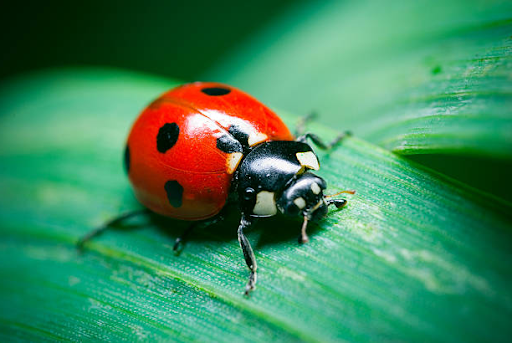
Ladybugs, also known as ladybird beetles, are among the most recognizable insects in the world. Their
bright colors and spotted patterns make them a favorite sight in gardens, but their charm is matched by their
ecological importance. Found on every continent except Antarctica, these small beetles are natural pest controllers, helping farmers and gardeners maintain healthy plants without relying heavily on chemical pesticides. Ladybugs belong to the beetle family Coccinellidae, ladybugs can also be yellow, orange, pink, or even black,with varying numbers of spots, or none atall. Their rounded, dome shaped bodies and short legs make them easy to identify. The bright colors serve as a warning to predators that they taste unpleasant, a defense
mechanism known as aposematism. Ladybugs undergo complete metamorphosis, passing through four distinct stages: egg, larva, pupa, and adult. They tend to be most active in warm weather and often hibernate in large groups during the winter, sheltering under leaves, bark, or inside buildings. These small bugs are best known for their appetite of aphids, tiny sap sucking insects that can damage crops and ornamental plants. A single ladybug may consume over 5,000 aphids in its lifetime. They also feed on other soft bodied pests such as scale insects, mites, and whiteflies. By keeping pest populations in check, ladybugs reduce the need for synthetic pesticides, which can harm beneficial insects, pollinators, and soil health. Across cultures, ladybugs are often seen as symbols of good luck and protection. In European folklore, farmers believed that a visit from a ladybug meant a good harvest. In some traditions, making a wish when a ladybug lands on you is thought to bring good fortune. Ladybugs may be small, but their impact is enormous. They are living proof that nature has its own solutions to
many of the challenges humans face in agriculture. By protecting and encouraging these tiny beetles, we not only safeguard our gardens but also contribute to a healthier, more sustainable environment.
Conservation Corner is a weekly article produced by the Forest County Land Conservation and Land Information Department. For more information contact Lucas O’Brien, Forest County Land Conservation Technician at 715-478-1387 or by e-mail at
