
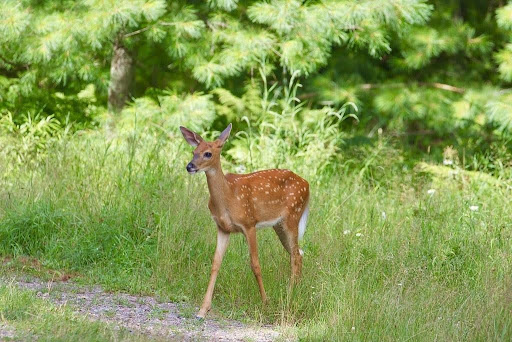
Each spring and early summer, the forests and meadows of northern Wisconsin welcome a new generation of white-tailed deer. Born in late May through June, these delicate fawns are a familiar yet rarely seen part of the region’s natural cycle. Their arrival marks a critical period in the life of the herd and in the balance of the Northwoods ecosystem. White-tailed deer fawns are typically born after a gestation period of about 200 days. A doe may give birth to one, two, or occasionally three fawns, each weighing as little as three to eight pounds. At birth, fawns are able to stand and walk within hours, but they lack the speed and stamina to outrun predators. For the first two to three weeks, their survival strategy is stillness and camouflage. Their reddish-brown coats are speckled with white spots, mimicking the spotty sunlight on the forest floor. During this time, the mother leaves them hidden in tall grass or underbrush for hours at a stretch, returning only to nurse. This behavior is normal and helps avoid drawing predators to the fawn’s location. Fawns are born virtually scentless, making it harder for predators such as coyotes, black bears, or bobcats to detect them. Their instinct to remain motionless when approached is a key defense. By the time they are three to four weeks old, they begin following their mother more actively, learning to forage and navigate the terrain. Northern Wisconsin’s climate and landscape pose unique challenges. Late spring can still bring cool nights, and heavy rains can chill young fawns. Predation pressure is significant, and habitat quality from forest cover to meadow edges plays a major role in survival rates. In years with abundant food and mild weather, more fawns survive to adulthood, strengthening the local deer population. Every year, well-meaning people come across fawns lying alone and assume they are abandoned. In reality, the mother is usually nearby. The Wisconsin Department of Natural Resources (DNR) urges residents and visitors to leave fawns where they are. Intervening can reduce their chances of survival and is often illegal without a permit. Conservation efforts in the region focus on maintaining healthy forest edges, controlling predator populations where necessary, and educating the public about wildlife behavior. By respecting the natural rearing process, we can help ensure that these young deer grow into fully mature deer that define much of Wisconsin’s wild beauty.
Conservation Corner is a weekly article produced by the Forest County Land Conservation and Land Information Department. For more information contact Lucas O’Brien, Forest County Land Conservation Technician at 715-478-1387 or by e-mail at