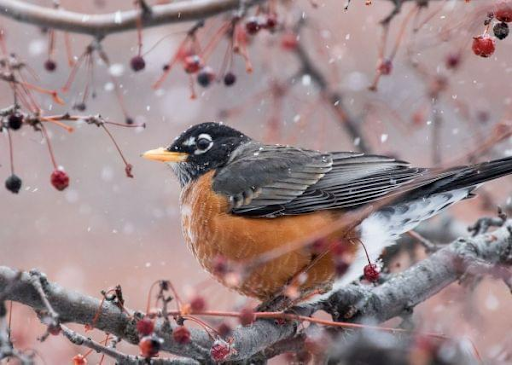
When the last patches of snow begin to melt and the air carries a hint of warmth, many people in North America look for one familiar sign, and that is the return of the American robin. With its warm reddish-orange breast, bright eyes, and cheerful song, this bird has become one of the most recognized symbols of spring’s arrival. The American robin is a member of the thrush family and can be found across most of the continent. In summer, they are common in backyards, parks, and open woodlands, hopping across lawns in search of earthworms and insects. Their distinctive “run-stop-peck” feeding style makes them easy to spot. For generations, people have associated robins with the end of winter. This is partly because many robins migrate south in the fall and return north as the temperatures rise. Their reappearance often coincides with the first thaw, budding trees, and the greening of grass. However, bird experts note that not all robins migrate far. Some stay in northern areas year round, but they are less visible in winter because they gather in flocks in wooded areas, feeding on berries instead of foraging on lawns. As spring approaches, they spread out again, making them more noticeable. One of the clearest signs of spring is the robin’s song, a series of clear, whistled phrases often heard at
dawn. Males sing to establish territory and attract mates, and their music is often among the first bird songs heard after the quiet of winter. Spring is also the robins breeding season. Females build cup shaped nest from grass, twigs, and mud, often in trees or on ledges. They lay pale blue eggs, which hatch after about two weeks. The robin’s role as a sign of spring is as much cultural as it is biological. For centuries, poets, gardeners,
and everyday observers have celebrated its arrival as a promise of renewal, growth, and warmer days ahead. The American robin is more than a bird, it’s a living calendar, reminding us that winter’s grip is loosening and a new season is slowly beginning.
Conservation Corner is a weekly article produced by the Forest County Land Conservation and Land Information Department. For more information contact Lucas O’Brien, Forest County Land Conservation Technician at 715-478-1387 or by e-mail at