
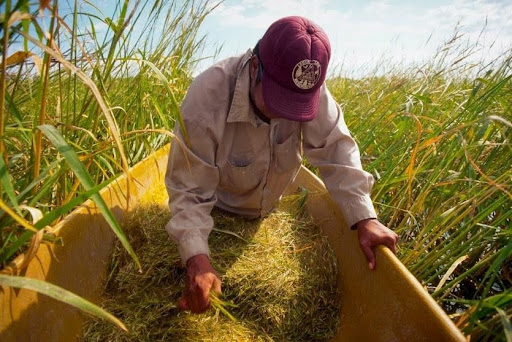
Wild rice, known as manoomin to Ojibwe people, is culturally and ecologically significant plant found in shallow, gently flowing waters of northern Wisconsin’s Great Lakes region. It thrives in mucky or organic lake bottoms with water depths between six inches and three feet, and ripens gradually over a 10–14 day period per stalk. Peak maturity for most Wisconsin wild rice beds occurs in early September, though ripening can start as early as late August and extend into mid-September depending on the waterbody. Because ripening is uneven, harvesters can collect rice multiple times on the same lake over a 2–3 week window, with the overall season lasting 4-5 weeks. Harvesting is done by “knocking” or “flailing” rice stalks with ricing sticks until kernels fall. The highest seeds mature first, so timing is key. If little to no rice falls, harvesters should wait a few days. Hand harvesting typically yields only 10-15% of the seed potential from a healthy acre. In 2026, the Wisconsin DNR reports a more promising wild rice outlook than in recent years, with stable water conditions after a wet spring and summer drought. However, long-term production has declined due to climate change, altered water levels from dams and culverts, and water quality issues. For Ojibwe and Menominee communities, wild rice is more than food, it is a spiritual and cultural cornerstone. Menominee oral tradition holds that wild rice was a gift from the underneath beings, and harvest ceremonies included offerings to ensure good weather. Ecologically, it supports fish, waterfowl, and other wildlife, and is a unique food source in the upper Midwest. Here are a few tips for harvesters. Check the Great Lakes Indian Fish & Wildlife Commission’s annual harvest outlook for each lake’s status. You can also sign up for the DNR email updates to stay informed on openings and closures. Harvest only when rice falls easily; avoid immature beds to protect future yields. Last tip is just being mindful of low water levels in some areas, which can cause canoes to bottom out. Wisconsin’s first ever Wild Rice Week (Aug. 30-Sept. 6, 2026) will highlight the plant’s cultural and ecological value, offering an opportunity to learn more and connect with the community.
Conservation Corner is a weekly article produced by the Forest County Land Conservation and Land Information Department. For more information contact Lucas O’Brien, Forest County Land Conservation Technician at 715-478-1387 or by e-mail at