
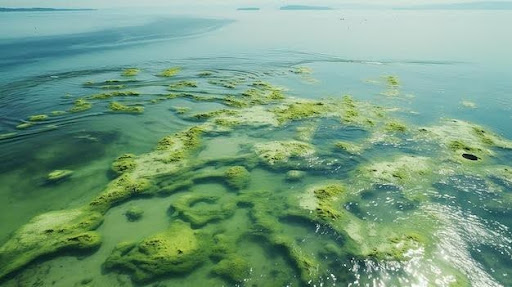
Algal blooms are rapid, often visible growths of algae in aquatic environments such as lakes, rivers,
and oceans. There are two types of algae blooms that can occur. The
first is harmful algal blooms (HABs) which are caused by toxin producing
species like cyanobacteria (blue- green algae), dinoflagellates, and
diatoms. Harmful algal blooms can appear as green, blue, red, or brown
water, scum, foam, or mats. Some grow beneath the surface, making them hard to detect. If the
water looks discolored, smells bad, or has scum, avoid contact. HABs can also poison fish,
shellfish, and humans. The other type of algal bloom is non-toxic blooms which are less
dangerous, but can still deplete oxygen, block sunlight, and affect water quality. There are
several different factors that can trigger algal blooms. One cause of algal blooms is nutrient
pollution which means that excess nitrogen and phosphorous from agricultural runoff, sewage,
and detergents are fueling algal growth. Another factor of algal blooms is climate change. When
there are warmer temperatures, this allows the growing season for algal blooms to increase.
Natural events like upwelling and seasonal changes in light, temperature, and nutrients can also
promote blooms. The last main cause is slow moving or stagnant water which increase water
temperature. Impacts can vary from different types of algal blooms. On the ecological side,
blooms can deplete oxygen, killing fish and other aquatic life as well as block sunlight which
blocks deeper organisms. Looking at the economic side this can affect fisheries, tourism, and
recreation. Human health can also be affected by algae blooms through contaminated fish,
swimming, or drinking water. Symptoms range from mild skin irritation to severe illness, and
cooking or boiling does not destroy the toxins. There are a few ways to prevent and manage
algal blooms from happening. The first action we can take is reducing fertilizer and detergent
use to limit nutrient runoff. Another step that can be taken is maintaining septic systems to
prevent sewage contamination. You can also support water quality regulations and monitoring
programs. In some cases, water treatment or algaecide use is applied under expert guidance.
Algal blooms are a natural occurrence but are increasingly linked to human activities and
climate change. While not all blooms are harmful, harmful algae blooms pose serious risks to
ecosystems, economies, and public health. Awareness, prevention, and monitoring are key to managing their impacts.
Conservation Corner is a weekly article produced by the Forest County Land Conservation and
Land Information Department. For more information contact Lucas O’Brien, Forest County Land
Conservation Technician at 715-478-1387 or by e-mail at