
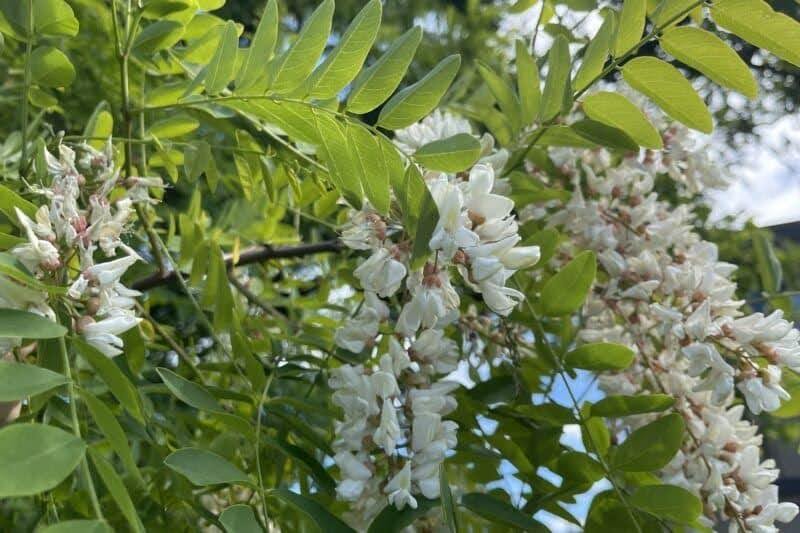
The black locust, also known as false acacia, is a fast-growing tree native to the Appalachian and Ozark regions of the United States. In Wisconsin, however, it Is considered an invasive species that threatens native ecosystems. While valued historically for its durable wood and fragrant flowers, its aggressive spread has made it a concern for land managers and conservationists. This tree has alternative leaves and pinnately compound oval leaflets. Often in late spring to early summer it will start to flower into a white pea-like cluster. One distinctive feature about these trees is their sharp thorns. Black locust thrives in sunny, well drained soils, often invading prairies, savannas, and open woodlands. Forest county has seen this species start showing up in different locations. One spot that black locust has been seen in Forest County is after a timber sale when most of the trees were logged. For the last few years, the land conservation and forestry department have been working to remove as much black locust as possible to make room for more desired trees. There are a few different management strategies when it comes to removing/controlling black locust. The first management strategy is mechanical control, this consists of cutting or girdling mature trees, followed by removal of resprouts. The second type of management is chemical control which is the application of systematic herbicides to freshly cut stumps or foliage. The third management tool is prescribed burning, this can suppress seedlings in prairie settings, though established trees are fire resistant. Last management option is long term monitoring. Because of its ability to regenerate from roots, follow up treatments are essential for several years. The management tools that the forestry department has been using on county forest land to remove black locust is mechanical control, chemical control, and long-term monitoring. Black locust may be listed as invasive in Wisconsin, but it is valued in other places for erosion control, honey production, and durable timber. The challenge lies in restricting its spread to sensitive natural areas while allowing controlled use where ecological risks are minimal. The black locust’s story in Wisconsin is a reminder that even well-intentioned introductions can have lasting ecological consequences. Effective management requires persistence, community awareness, and a willingness to act before small stands become large colonies. By understanding its traits and impacts, landowners and conservationists can better protect Wisconsin’s native landscapes.
Conservation Corner is a weekly article produced by the Forest County Land Conservation and Land Information Department. For more information contact Lucas O’Brien, Forest County Land Conservation Technician at 715-478-1387 or by e-mail at