
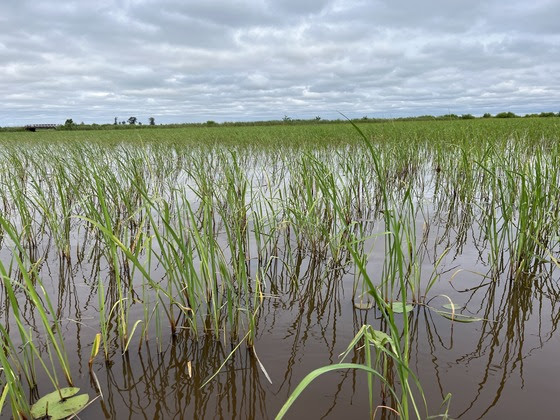
The Wisconsin Department of Natural Resources (DNR) encourages boaters to be aware of early-growth wild rice while out on Wisconsin’s lakes, rivers and flowages ahead of the Fourth of July weekend and throughout the rest of the summer growing season.
In early July, wild rice plants are at a higher risk of being uprooted during the early growth season, making it a vital time for boaters and other outdoor recreators to be aware of wild rice growth. The rice will likely have leaves growing above the water and become more visible as a grass growing out of the water.
It isn’t until closer to the Labor Day weekend when these plants will be more robust and have stalks that support the seeds of this treasured grain. To learn more about the wild rice life cycle, visit the UW-Madison Sea Grant website.
Wild rice, also known as “manoomin” by the Ojibwe people, has two species in Wisconsin. “Northern rice” (Zizania palustris) is harvested by people for food and found in lakes, rivers and flowages in northern Wisconsin. “Southern rice” (Zizania aquatica) is a taller plant that is typically found in river systems in the southern part of the state. Since the seeds are smaller, it’s not usually harvested.
How Boaters Can Help
Before heading out, the DNR encourages boaters to check the DNR’s Surface Water Data Viewer to see if wild rice has been documented in the lakes, rivers or flowages they plan to visit. This layer in the mapping tool is not inclusive of all wild rice waters but will show water bodies where wild rice is more abundant.
Waves created by boats will uproot growing rice plants during vulnerable stages of growth when they are just below or above the surface of the water. Boaters on known wild rice waters are encouraged to practice slow/no wake near shallow areas that might have wild rice growing, particularly in shallow areas of bays, backwaters and near inlets and outlets of streams.
Indigenous Significance Of Wild Rice
Found only in the upper Midwest and parts of Canada, wild rice was once abundant in northern Wisconsin and continues to hold a timeless, unchanging place in the culture, identity and spirituality for many Tribal Nations in Wisconsin.
The plant has long been a key part of ceremonies, feasts and food security for certain Tribal Nations. The traditions surrounding the wild rice harvest carry on all year. But its presence in state waters has declined significantly over the past several decades due to threats like increased temperatures and stronger and more frequent storms resulting from climate change.
Ecological Importance Of Wild Rice
Wild rice, an annual aquatic plant, provides a rich food source and habitat for wildlife, including waterfowl, blackbirds and muskrats. Wild rice beds exist as places of high biological diversity with numerous benefits that extend throughout the food chain. Protecting important areas where wild rice thrives will help ensure the persistence of many of Wisconsin’s wildlife for all to enjoy. The plant is also known to be an indicator of good water quality and a healthy ecosystem.
Boaters should continue to be aware of wild rice growth throughout the summer. Depending on the lake, wild rice harvest typically takes place in September.
For more on wild rice in Wisconsin, visit the DNR’s wild rice webpage. Sign up for DNR email alerts to receive wild rice harvesting updates.