
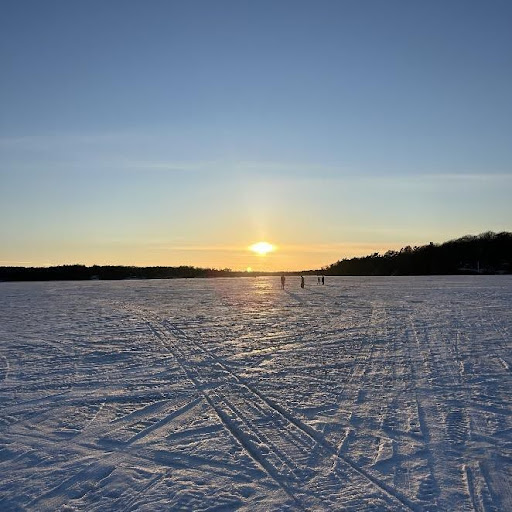
Late ice fishing season can be both exciting and frustrating. On one hand, the days are longer, the sun in warmer, and the ice often feels safer to travel on than in the unpredictable early season. On the other hand, many anglers notice a trend that the fish don’t seem as eager to bite. This slowdown isn’t just bad luck, it’s the result of a combination of biological, environmental, and behavioral factors that change dramatically as winter draws to a close. As winter progresses, oxygen levels in many lakes drop. Aquatic plants that produced oxygen in summer and early winter begin to decay under the ice, consuming oxygen instead of producing it. Many species also become sluggish in low-oxygen environments, conserving energy and feeding less aggressively. Fish also have changes in their metabolism over the winter months. Fish are cold blooded, meaning their body temperature and metabolism are tied to the water temperature. In late winter, metabolic rates are at their seasonal low, so fish require less food to survive. They also may only feed only during short, specific windows, making timing more critical for anglers. As we get later in the season there is also shifts in food availability. Many insect larvae and other prey species become less active or harder to find. With fewer easy meals available, fish may move to different areas or feed more selectively. Another factor that can affect late ice fishing season is the change in habitat. The abundant vegetation that held fish earlier in the season may now be sparse or gone. Species like perch and crappie may move toward deeper basins or, conversely, toward shallower areas in preparation for spring spawning. Last but not least is angler pressure. By late season, fish in popular lakes have often been targeted for months. Fish can become more cautious after repeated exposure to lures and noise. If anglers don’t adjust tactics such as changing lure size, color, or presentation speed, fish may simply ignore familiar offerings. The late ice bite slows down because the underwater world is in transition, oxygen is scarce, metabolism is low, food sources are shifting, and fish are often wary from months of angling pressure. Understanding these changes can help anglers adapt their strategies, turning a slow day into a productive one. As the season winds down, remember that game species (Walleye, Largemouth bass, Smallmouth bass, and Northern Pike) season will be closing on March 1st. Good luck the rest of the ice fishing season and tight lines!
Conservation Corner is a weekly article produced by the Forest County Land Conservation and Land Information Department. For more information contact Lucas O’Brien, Forest County Land Conservation Technician at 715-478-1387 or by e-mail at