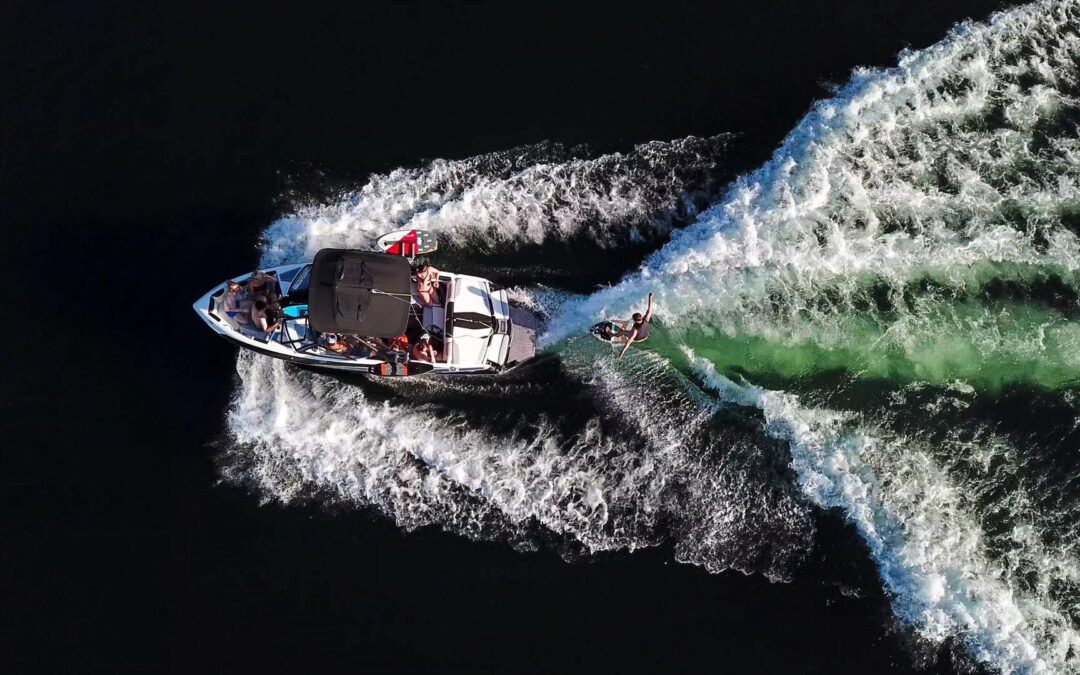
Check out the above video of a 2022 Nautique G23 Paragon (600 hp, 7,200 dry weight/2,200 lb ballast) cruising past in 14 feet of depth. Note: A 2025 model comes standard with 5% more power (630hp), 8% more weight (7,750 dry weight), and 68% more ballast (3,700 lb)
|
For many years, the Water Sport industry Association maintained that enhanced wake recreation did not disturb lake beds or resuspend sediments when operated in 10 feet of depth. The video released from the University of Minnesota St. Anthony Falls (SAFL) in July 2025 dramatically exposed the reality click on the above video.
The University of Minnesota study is widely interpreted to advocate operation at 20 feet of depth. Their recommendation, however, is more complicated. They advocate 20 feet above the top of submerged vegetation.
When setting a statewide standard, we need to be protective of our valuable inland lakes while being guided by the bounds of recognized science.
What do we know?
|
- Disturbing the lake bottom increases nutrient availability which can stimulate algae growth. (Research indicates that 90-95% of phosphorous entering a lake is accumulated in the top few inches of sediment.) Disturbances reduce water clarity, damage aquatic plant beds which support fish populations, and recirculate available heavy metals.
- Repairing a lakebed by planting native aquatic plants necessitates preventing recreation in the repaired area and has not been successful. With minor damage, lakes have seen open lakebeds colonized by segments of the invasive Eurasian Water Milfoil. In other lakes where the plant community has been destroyed nothing has returned, and it remains, in the words of a DNR biologist, “a muddy soup.”
- Other reputable research has shown lakebed disturbance at greater depths than the University of Minnesota SAFL study including 26 feet and 33 feet. A Wisconsin based research group found that the makeup of the lake bottom’s sediment as well as the lake’s chemistry may affect how reactive the lake bottom is to wave pressure. Many lakes have a variety of lakebed substrates within the same lake.
- Wake boats are getting bigger and heavier. The 2026 model of the boat used in the University of Minnesota SAFL study is 5% more powerful, weighs 8% more, and can carry 68% more ballast than the 2022 model they used.
|
- Existing studies measure wake impacts only when a wake boat passes directly over a sensor while operating in surfing mode. They do not account for other high-energy activities—such as acceleration from a stop or repeated turning to retrieve a rider—which likely generate greater disturbance.
- On many lakes, wake surfing involves repeated passes by multiple boats throughout the day. The cumulative effect of overlapping bow and stern pressure waves, transverse waves, and propeller wash from multiple vessels remains unstudied and poorly understood.
- There are also unresolved questions about whether wake boat activity—even in deeper water—enhances vertical mixing across the thermocline, potentially transporting nutrients from deeper layers into warmer surface waters and altering lake ecology.
|
With all that we know, and all the noted concerns, a reasonable, forward-looking recommendation is requiring ballast operated recreation to occur in a minimum depth of 30 feet.
Enhanced wake recreation enthusiasts know that better waves are created in deeper water which results in a more exciting run. Yes, that might mean that not all of Wisconsin’s glacial lakes are appropriate for that type of recreation.
Let’s all protect our waters and match our recreational pursuits to what each lake can support.
|
| Please review our joint statement with Last Wilderness Alliance (HERE)
Cathie Erickson – Policy Committee Chair
Susan Trier – President
Ben Wojahn – Executive Director
For more information, please visit wisconsinlakes.org
Wisconsin Lakes
PO Box 7723
Madison WI 53707
info@wisconsinlakes.org
We Speak for Lakes! |
|
|